What replaced the Saucony Peregrine 14?
Updated August 9, 2026. Specs are men's US 9.
Amazon links on this page pay us a commission. It never changes your price. Details
THE SHORT ANSWER
The Saucony Peregrine 15 replaced the Peregrine 14 in early 2025 and fixed its failures point for point. A newly formulated, softer PWRTRAC compound with full heel coverage replaced the exposed section where the 14's rubber split, a 360-degree rand wrapped the upper the 14 tore, and the foam softened. Reviewers scored it 9.6 and higher, and it became the community's favourite Peregrine.
- Saucony Peregrine 14Sizes running outMen's at AmazonWomen's
- Saucony Peregrine 15Sizes running outWomen's
Availability last checked Sep 10, 2026. Prices and stock change without notice.
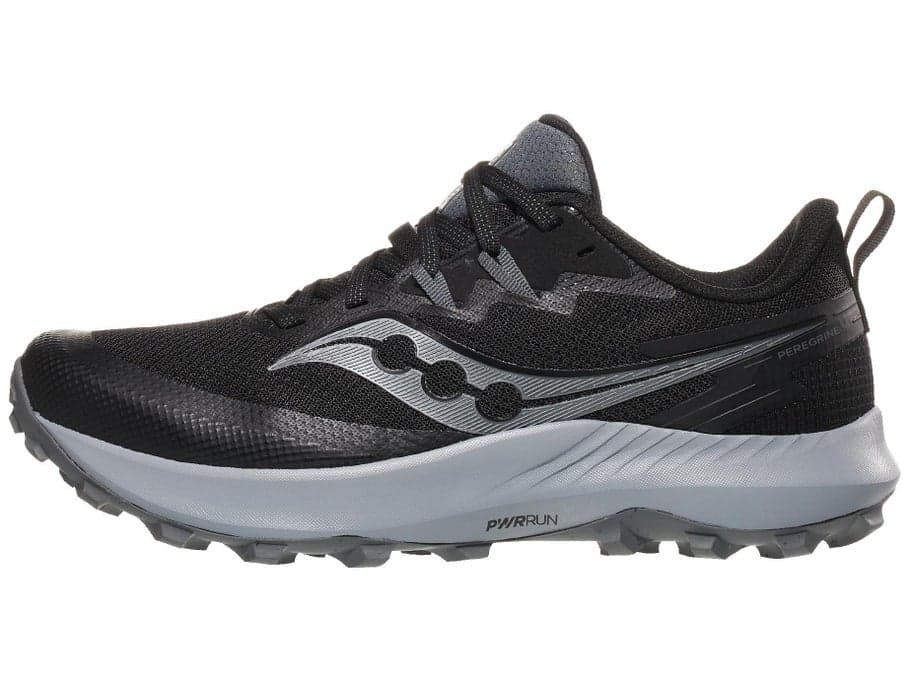
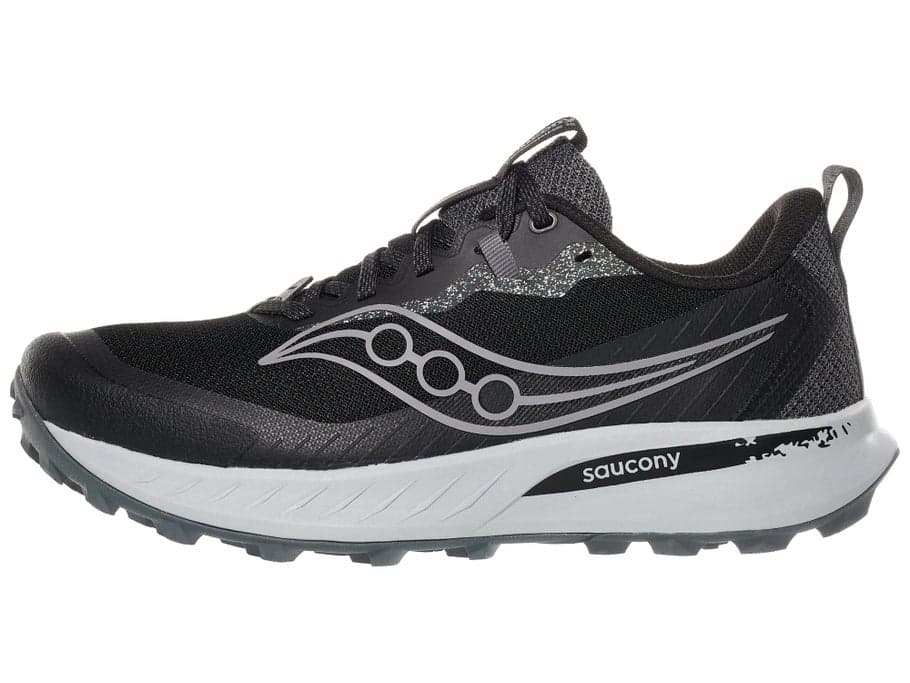
At a glance
- Weight is unchanged
- 3 mm less heel stack
- Drop is unchanged at 4 mm
- New midsole foam
Every spec side by side, with the reason behind each change: Peregrine 14 vs 15.
Stay on your shoe, or switch?
Refined, same shoeThe course correction, executed point for point against the 14's complaint list even though nobody at Saucony called it that. Softer reformulated rubber over the heel that used to split, a rand over the fabric that used to tear, softer foam under it all. Road Trail Run scored it 9.6 and 9.75, Believe in the Run titled its review Ready to Fly Again and called it close to the perfect daily trail shoe, RunRepeat gave it 87. At 67 percent it is the community's highest-rated Peregrine, and the reference point the 16 now gets measured against.
Stick with the Peregrine 14 if
- You want maximum grip in mud: the 15's lugs run deeper than what replaced it
- Your complaint history with this line is uppers, since the 15's rand is the best armour a Peregrine has worn
Move to the Peregrine 15 if
- Wet rock decides your shoe choice; the Vibram outsole that follows is the line's biggest grip upgrade ever
- You want more foam: the 16 adds a real 4 mm at both ends
Where the Saucony Peregrine is now
Two updates on, the Peregrine 16 (2026) is what sits on shelves today. Against the shoe you own rather than the one that directly replaced it:
- The Peregrine 16 is 0.4 oz heavier
- 1 mm more heel stack
- Drop is unchanged at 4 mm
- New midsole foam
- List price up $5
What loyalists said about the update
The best-liked Peregrine on record, 67 percent positive, and the first one in years whose durability reviews trend positive. Not unanimous: Zappos owners sat at a cooler 3.8 across a small sample, the toebox complaint survived intact (for a wide shoe the toebox was too restrictive), and one runner's heel stitching split at 180 miles to prove the curse only faded. The strongest endorsement came later, from Believe in the Run's Peregrine 16 review, which graded the new shoe down because the magic conjured by the 15's foam, soleplate and upper was gone.
Still want the original?
Buy remaining Peregrine 14 stock
Sizes running outDiscontinued at retail. Amazon carries what remains, so treat an in-stock size as a closing window, and expect prices to swing.
Availability last checked Aug 9, 2026.
Ready to move on?
Beyond the Peregrine 15, these come closest to what the Peregrine 14 did.
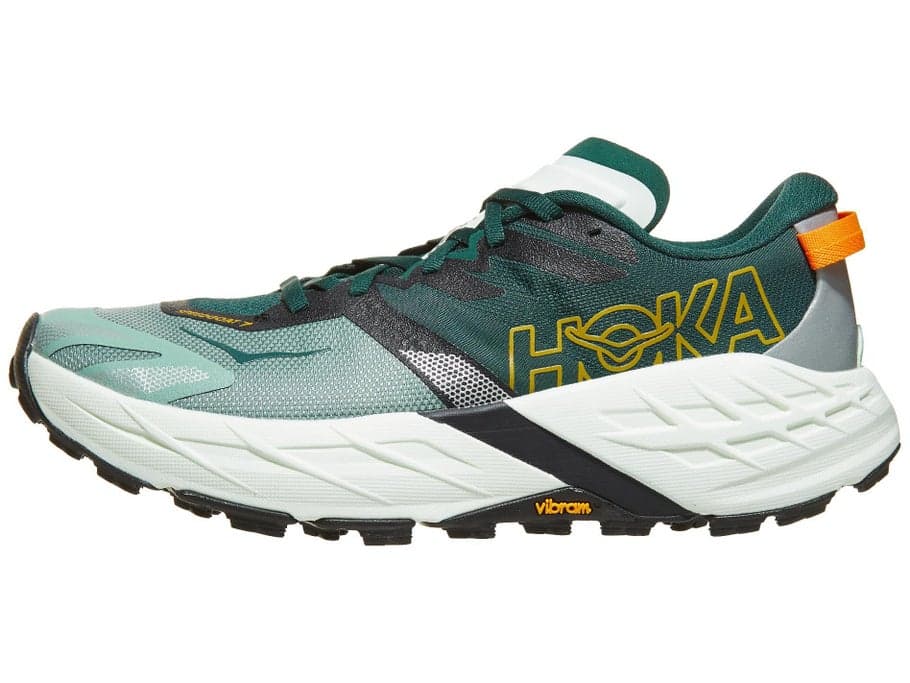
- 9.6 oz
- 5 mm drop
- 40 mm heel
- $165 list
The two mainstream technical-trail picks, split by philosophy. The Speedgoat stacks 40 mm of foam on a 5 mm drop and protects with sheer volume; the Peregrine sits around 30 mm on a 4 mm drop and protects with a rock plate, trading cushion for ground feel and about an ounce. Since the Peregrine 16 they share Vibram Megagrip rubber, so the choice is now purely about how much shoe you want between you and the trail.
Against your Saucony Peregrine 14: 0.2 oz heavier, 9 mm more heel stack, 1 mm more drop, $25 more at list.
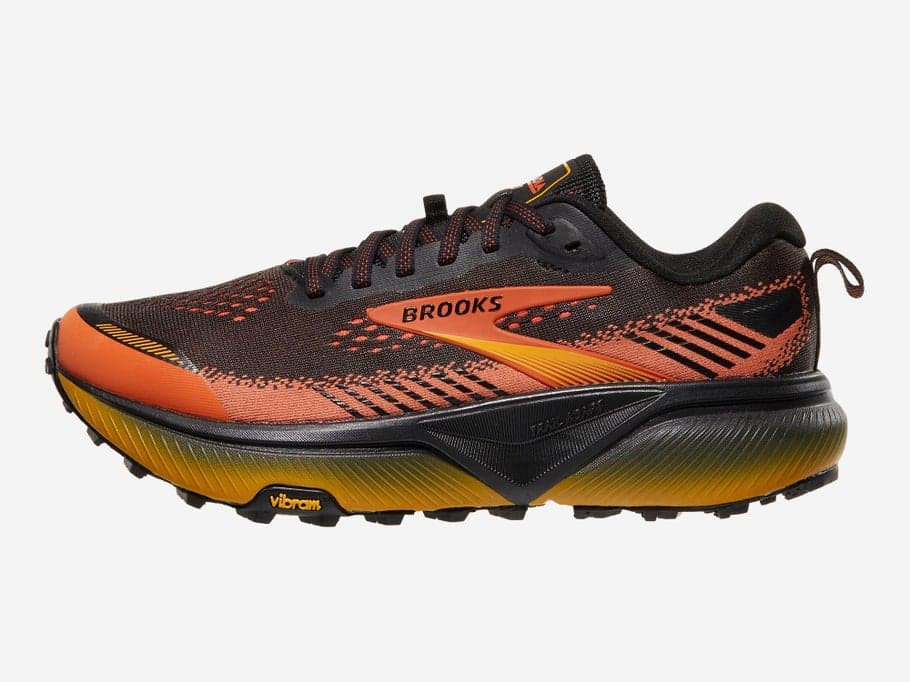
- 10.8 oz
- 6 mm drop
- 38 mm heel
- $160 list
The other conventional-drop trail workhorse with a rock-plate heritage, one shelf over. The Cascadia is the heavier, more protective, more hiking-adjacent of the two, with a 2E width the Peregrine only recently matched; the Peregrine is lighter, lower and quicker. Believe in the Run benchmarked the Peregrine 16 against the Cascadia 19 directly, and both lines swapped their house rubber for Vibram within a year of each other.
Against your Saucony Peregrine 14: 1.4 oz heavier, 7 mm more heel stack, 2 mm more drop, $20 more at list.
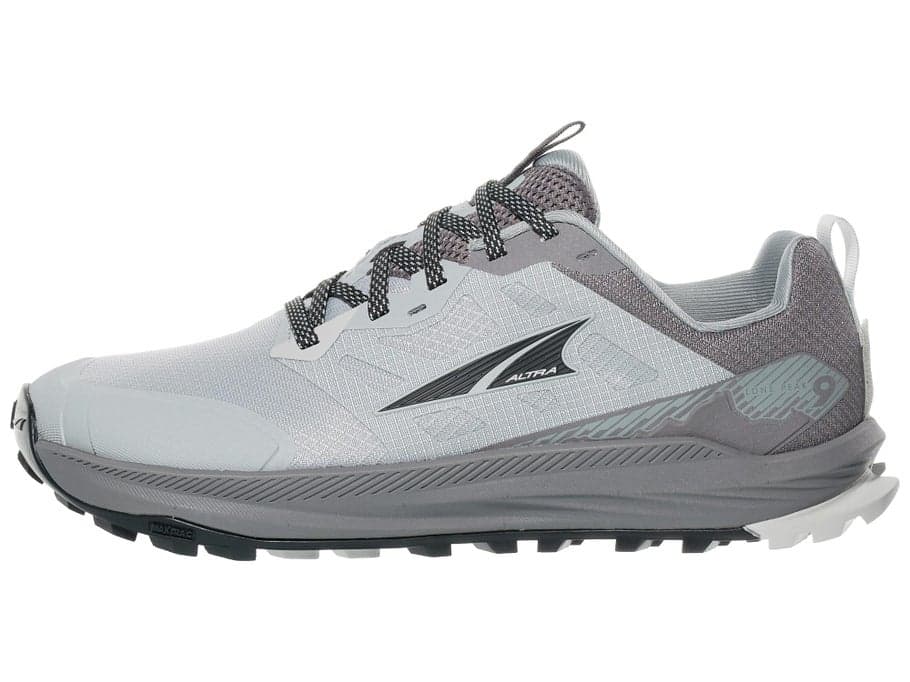
- 10.4 oz
- 0 mm drop
- 25 mm heel
- $140 list
The two low-stack, ground-feel trail shoes, separated by the drop question. The Lone Peak is zero drop and foot-shaped at 25 mm; the Peregrine runs 4 mm with a conventional taper and a snugger midfoot, plus a rock plate the Lone Peak buries in its midsole. Runners who want trail feel without committing to zero drop usually land on the Peregrine; the traffic the other way is Peregrine owners whose toes want more room.
Against your Saucony Peregrine 14: 1 oz heavier, 6 mm less heel stack, 4 mm less drop.
Questions runners ask
- Is the Saucony Peregrine 14 still available?
- For now. Amazon still lists the Saucony Peregrine 14, but the size run is thinning and prices swing with remaining stock. If your size is there, this is the late window, not the early one.
- Is the Peregrine 15 a downgrade from the Saucony Peregrine 14?
- No. Most runners rate the Peregrine 15 as the same shoe done slightly better. The changes are real but none of them alter what the shoe is.
- Is the Saucony Peregrine still made?
- Yes. The current version is the Saucony Peregrine 16, released in 2026, 2 versions on from the Saucony Peregrine 14.
- What is the closest current alternative to the Saucony Peregrine 14?
- The Hoka Speedgoat 7. The two mainstream technical-trail picks, split by philosophy. The Speedgoat stacks 40 mm of foam on a 5 mm drop and protects with sheer volume; the Peregrine sits around 30 mm on a 4 mm drop and protects with a rock plate, trading cushion for ground feel and about an ounce. Since the Peregrine 16 they share Vibram Megagrip rubber, so the choice is now purely about how much shoe you want between you and the trail.